

Project Information
Our Key Projects
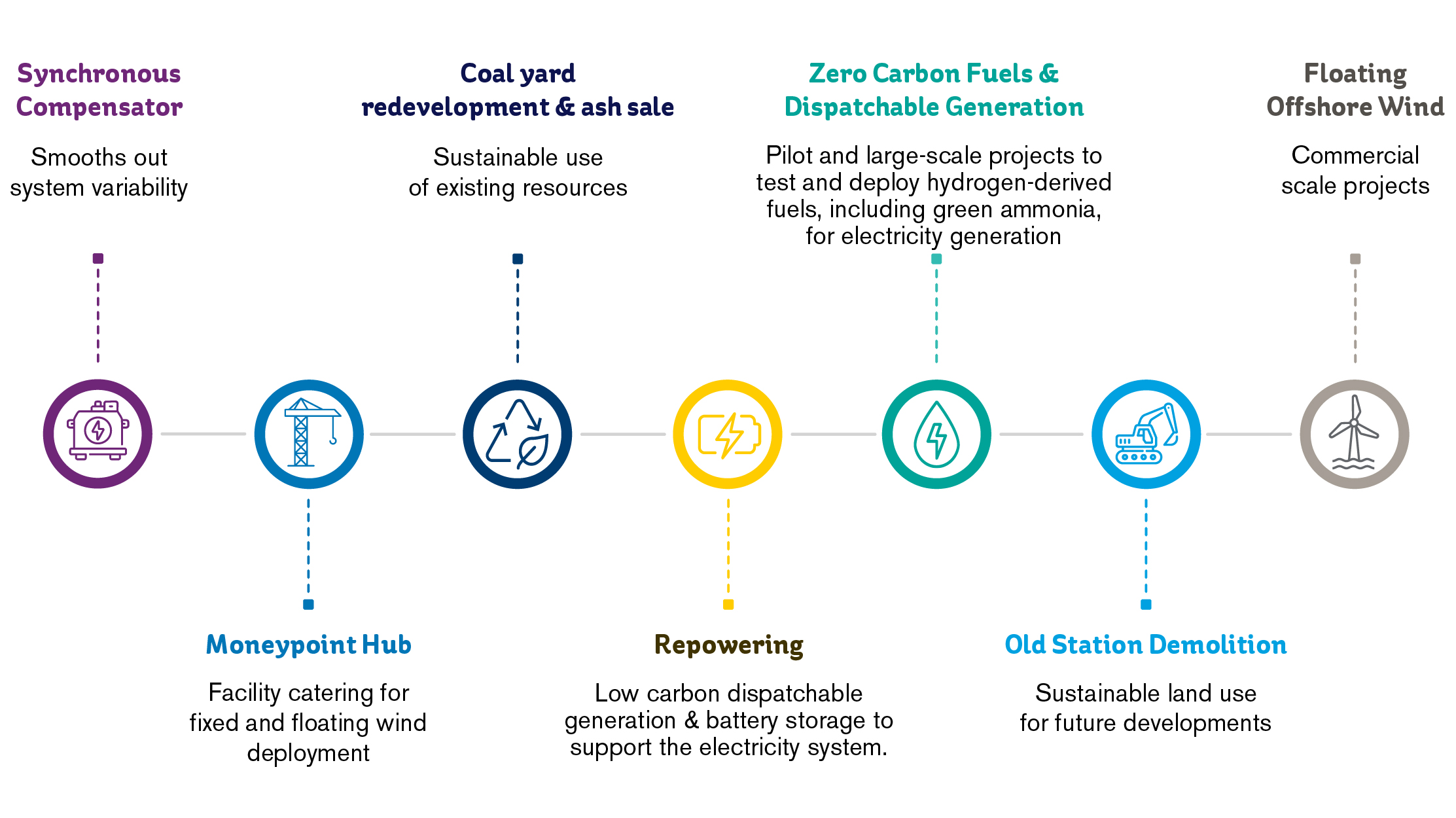
Moneypoint Synchronous Compensator
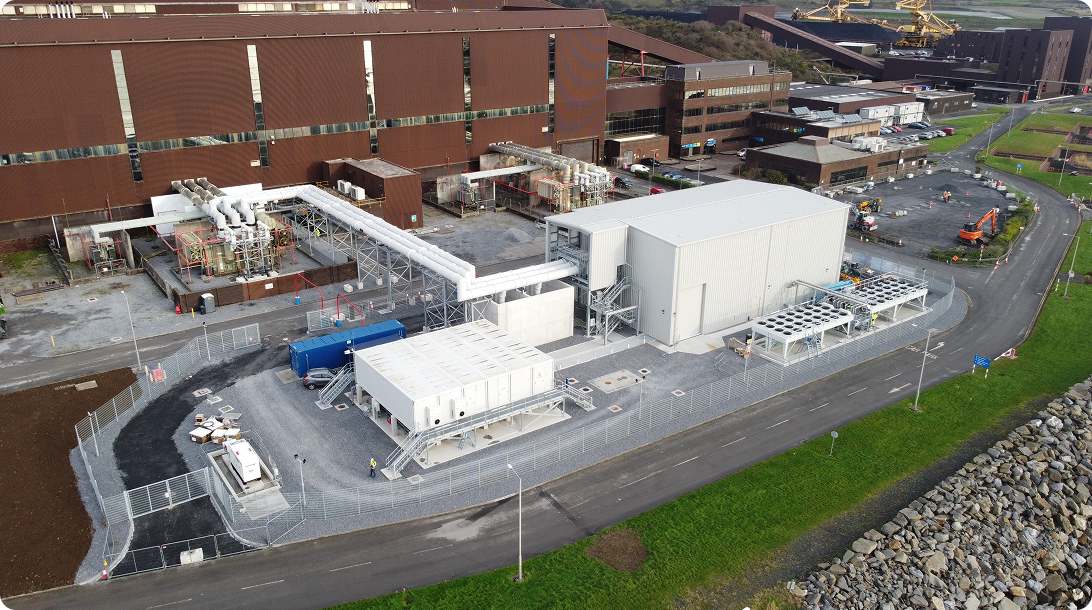
The synchronous compensator at Moneypoint has been in operation since 2023, representing an investment of more than €50m by ESB. Synchronous compensators are electrical devices that are used to manage the stability of the national grid, including the relationship between voltage and current and the resilience of the system to sudden faults. The addition of synchronous compensator devices into the Irish national grid, like the one at Moneypoint, allows for increased utilisation of electricity generated from non-synchronous sources such as wind and solar.
Moneypoint Hub
ESB proposes to develop a new large-scale port facility for the construction, assembly, deployment and maintenance of offshore wind projects – the Moneypoint Hub project. It is envisaged that Moneypoint will be developed to serve both the fixed and floating turbine industries and other maritime renewable energy technologies. It will act as a dedicated land and marine facility for staging, fabrication and deployment of offshore wind foundations.
Coal Yard Redevelopment
We plan to repurpose the existing coal yard for future power generation developments. Existing large-scale coal handling infrastructure will be removed from the site on a phased basis.
Ash Circular Economy Project
Sustainable reuse of legacy materials, including pulverised fly ash (PFA), furnace bottom ash (FBA) and flue gas desulphurisation (FGD) by-products. These by-products have the potential for re-use, which is a significant benefit to the circular economy.
Repowering
Moneypoint will continue to act as a dispatchable thermal generation site ensuring energy security for the country in the context of an increasingly renewable energy system. It is envisaged that this will necessitate the development of new renewables enabling plant. It is currently envisaged that any such facility will be capable of converting to low and zero carbon fuels as technology develops.
The development of adequate long- and short-term energy storage is essential to supporting an energy system that is increasingly reliant on renewable energy generators, which are, by their very nature, intermittent in nature. It is anticipated that energy storage will be accommodated within the Moneypoint site. In the longer term, the site could see the deployment of 8-100 hour long duration energy storage, as battery technologies develop. At longer storage durations, iron-air (or “rust”) battery technology is showing promise.
ESB is currently developing new generation projects at Moneypoint including approximately 600 MW of dispatchable generation operating on low or zero carbon fuels and approximately 300 MW of long-duration energy storage (LDES), both ensuring reliable backup for renewable energy.
Zero Carbon Fuels and Dispatchable Generation
The coming years will see the deployment of pilot scale projects to test new technologies capable of producing, storing, and generating electricity from hydrogen-derived fuels, including green ammonia. In the 2040s the site could see the development of inter-seasonal electricity storage infrastructure to support Ireland’s energy security of supply. This could include the production of hydrogen-derived fuels, such as green ammonia, from surplus renewable electricity. This zero-carbon fuel could be stored in tanks and used for zero-carbon power generation during prolonged periods of low renewable power generation. Import facilities for hydrogen-derived fuels may also be developed, which could be used where indigenous production or pipeline imports of zero-carbon fuels were insufficient. Such infrastructure would take a long time to develop and would likely require EU support. ESB is taking early first-steps to explore the feasibility of such infrastructure under the “Callan” programme of electricity storage projects.
Floating Offshore Wind
Supporting Ireland’s offshore wind ambitions through enabling infrastructure development, research, and international collaboration in preparation for when the National Designated Maritime Area Plan is launched by government in 2027 and floating offshore wind projects development sites are identified.